
The Synergy Between aeo seo agency Services and High-Ranking Content
What Are AEO SEO Agency Services and How Do They Help in Creating High-Ranking Content?
AEO SEO agency services optimize content to directly answer user questions, positioning websites as authoritative answer sources across AI-powered search platforms. These specialized agencies focus on structuring content for featured snippets, voice search results, and AI overview boxes that appear at the top of search engine results pages.
The Synergy Between aeo seo agency Services and High-Ranking Content
When comparing an AEO vs SEO agency, the key difference lies in how content is structured and optimized. A modern agency that understands both approaches combines high-ranking SEO content with Answer Engine Optimization strategies, using strategic formatting that satisfies traditional search algorithms as well as advanced answer engines. This includes implementing question-based content structures, concise and direct paragraph formats, and structured data such as schema markup to maximize visibility across search engines and AI-powered platforms.
Core AEO Service Components
AEO agencies deliver several specialized services that elevate content performance:
- Question-led content architecture that mirrors natural language queries users type or speak
- Featured snippet optimization using bulleted lists, numbered steps, and definition-style answers
- Structured data implementation through schema.org markup for enhanced search understanding
- Entity optimization that establishes topical authority around specific subjects
Direct Impact on Content Rankings
These services transform standard blog posts into answer-ready resources. When agencies apply AEO principles, content becomes more likely to capture position zero (featured snippets) and appear in AI-generated summaries. A well-optimized FAQ section can rank for dozens of long-tail queries simultaneously.
Content structured with clear headings, direct answers in opening sentences, and supporting details in subsequent paragraphs performs better across multiple search formats. This approach satisfies Google’s BERT algorithm, which prioritizes understanding user intent and context.
AEO agencies also focus on conversational keyword integration, matching how people actually phrase questions rather than just targeting traditional keyword variations. This alignment with natural language processing makes content more discoverable through voice assistants and chatbot interfaces.
How Does Answer Engine Optimization (AEO) Work With Traditional SEO Techniques?
AEO and traditional SEO work together as complementary strategies. Traditional SEO builds authority over time, while AEO focuses on capturing immediate answer opportunities.
The Foundation Layer: Traditional SEO Elements
Traditional SEO provides the essential groundwork that makes AEO implementation effective. Without strong domain authority, proper site architecture, and optimized metadata, even perfectly structured answers struggle to gain visibility. Search engines evaluate trustworthiness through metrics like:
- Domain age and historical performance
- Quality and quantity of referring domains
- Technical health indicators (Core Web Vitals, mobile responsiveness)
- Consistent content publishing patterns
- Proper indexation and crawlability
These factors determine whether a website qualifies for featured snippet consideration or AI-generated answer inclusion. A site with weak traditional SEO signals rarely appears in answer boxes regardless of content quality.
The Answer Layer: AEO Specifics
AEO builds upon traditional SEO by structuring content to match how users phrase questions and how AI systems extract answers. This involves formatting content with clear question-and-answer patterns, using schema markup to identify key information, and organizing data in easily parseable formats like tables, lists, and definition blocks.
Direct answer positioning represents a critical AEO technique where the most concise response appears immediately after the question heading. This 40-60 word answer block increases chances of extraction by AI systems scanning for quick responses. The content then expands with supporting details, examples, and context that satisfy both human readers and algorithmic depth requirements.
Keyword Strategy Integration
Traditional SEO targets broad keyword clusters to capture search volume across multiple related terms. AEO refines this approach by identifying specific question variations and long-tail conversational phrases. A traditional SEO strategy might target “project management software” while AEO simultaneously optimizes for “what project management software integrates with Slack” or “how much does project management software cost for small teams.”
This dual approach captures both users in research mode (traditional SEO) and those seeking immediate answers (AEO). The combination maximizes
How SEO Agencies Improve Online Visibility Beyond Content Creation
SEO agencies do much more than just write blog posts. They also make important improvements to the technical aspects of a website, build high-quality backlinks, and optimize the site’s structure for both search engines and users. These foundational elements are crucial for ensuring that well-written content can achieve its highest possible ranking.
Technical SEO Improvements
Professional agencies identify and fix technical issues that prevent search engines from properly crawling and indexing website content. Here are some key areas they focus on:
- Site speed optimization: This involves reducing page load times through techniques such as image compression, code minification, and server response improvements.
- Mobile responsiveness: Agencies ensure that websites provide seamless experiences across devices, which directly impacts rankings since Google prioritizes mobile-friendly sites.
- Core Web Vitals optimization: This addresses specific performance metrics like loading speed (Largest Contentful Paint), interactivity (First Input Delay), and visual stability (Cumulative Layout Shift).
- XML sitemap creation and robots.txt configuration: These guide search engine crawlers to prioritize important pages while avoiding duplicate or low-value content.
- Schema markup implementation: This adds structured data that helps search engines understand page context, increasing eligibility for rich results.
Building Authority Off-Page
Link acquisition strategies establish domain credibility through relationships with authoritative websites in relevant industries. Here are some methods agencies use to build backlinks:
- Competitor analysis: By studying successful competitors’ backlink profiles, agencies can identify potential link opportunities.
- Broken link building: This involves finding broken links on other websites and reaching out to suggest replacing them with links to clients’ relevant content.
- Digital PR campaigns: Agencies create newsworthy stories or events that attract media coverage and naturally earn backlinks from reputable sources.
Brand mention monitoring tracks unlinked citations across the web, creating opportunities to convert mentions into valuable backlinks. Guest posting on industry-leading publications positions clients as thought leaders while generating referral traffic and link equity.
Local SEO and Multi-Location Optimization
Google Business Profile management ensures accurate business information appears in local search results and map packs. Here are some ways agencies optimize profiles:
- Relevant categories: Selecting the most appropriate categories for businesses helps them appear in relevant searches.
- High-quality images: Adding appealing images showcases products or services and attracts potential customers.
- Regular posts: Sharing updates about promotions, events, or new offerings keeps the profile active and engaging.
- Prompt review responses: Responding quickly to customer reviews signals active engagement and encourages more reviews.
Citation building distributes consistent NAP (Name, Address, Phone) information across directories like Yelp, Yellow Pages, and industry-specific platforms. Location-specific landing pages target geographic keywords while providing unique value to users in different service areas.
Integration with Conversion Rate Optimization
User experience audits identify friction points in the customer journey that reduce conversion rates despite strong traffic numbers. Agencies implement A/B testing to compare different versions of landing pages or calls-to-action (CTAs) and determine which ones perform better.
By combining SEO efforts with conversion rate optimization strategies, agencies ensure that increased visibility leads to actual business results such as higher sales or sign-ups.
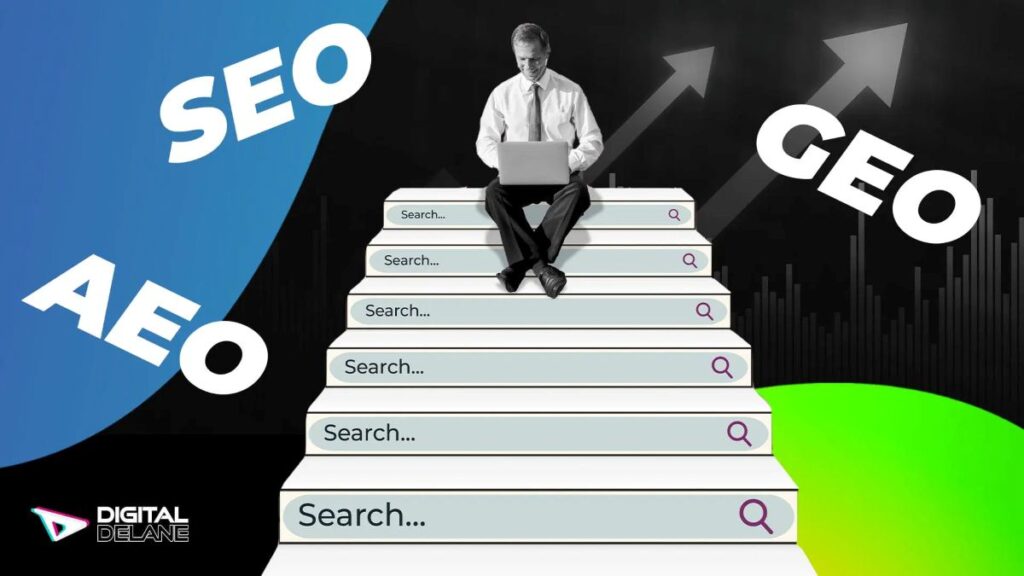
Why Is Structuring Content Around User Queries Crucial for Achieving High Rankings?
Structuring content around user queries directly addresses how modern search engines evaluate and rank pages. Search algorithms prioritize content that precisely answers what users are searching for, making query-based structuring essential for visibility in both traditional results and AI-powered answer boxes.
The Search Engine Perspective on Query-Matched Content
Search engines have evolved from simple keyword matching to understanding user intent. Google’s algorithms now analyze whether content satisfies the specific question behind a search query, not just whether keywords appear on the page. Content structured around actual user questions signals relevance to these sophisticated systems, increasing the likelihood of ranking for multiple related queries.
The synergy between AEO SEO agency services and high-ranking content becomes apparent when examining how query-structured content performs. Pages organized with clear questions as headings and direct answers in opening sentences receive preferential treatment in:
- Featured snippet selections
- “People Also Ask” boxes
- AI overview sections
- Voice search results
User Behavior Patterns That Reward Query-Based Structure
Visitors scanning search results gravitate toward content that mirrors their search language. When a user types “how does X work” and finds a heading with that exact phrasing, they immediately recognize the content as relevant. This recognition translates to higher click-through rates, which search engines interpret as a quality signal.
Dwell time increases when readers quickly locate answers to their questions. A visitor who finds their answer within the first paragraph often continues reading related sections, creating engagement metrics that boost rankings. Query-structured content creates this virtuous cycle by reducing friction between search intent and content delivery.
The Technical Advantages of Question-Based Formatting
Search engine crawlers parse content more effectively when it follows a question-answer structure. This formatting creates natural semantic relationships between topics, helping algorithms understand content hierarchy and relevance. Schema markup becomes more powerful when applied to clearly defined question-answer pairs, enabling rich results that dominate search pages.
AEO SEO agency services leverage this technical advantage by implementing structured data that explicitly identifies questions and answers. This markup communicates directly with search engines, eliminating ambiguity about content purpose and increasing chances of enhanced display formats.
Matching Content to Search Query Types
Different query types demand specific structural approaches:
Informational Queries: For queries seeking knowledge or explanations, using headings that pose questions can be effective. Providing concise yet comprehensive answers in subsequent paragraphs caters to both human readers and search engine algorithms.
Navigational Queries: When users intend to reach a specific website or webpage, incorporating brand names or URLs within the content can improve relevance. Additionally, optimizing title tags and meta descriptions with these keywords enhances visibility in search results.
Transactional Queries: Queries indicating an intention to make a purchase or complete a transaction require persuasive elements within the content. Including product reviews, comparisons, or testimonials alongside clear calls-to-action can influence decision-making processes.
By aligning your content structure with these different types of queries, you increase its chances of satisfying user intent and ranking higher in relevant searches. Check out more about Umbraco agency vs. In-House: The Best Choice for Sydney Businesses.
How Combining AEO With Traditional SEO Creates a Comprehensive Digital Presence
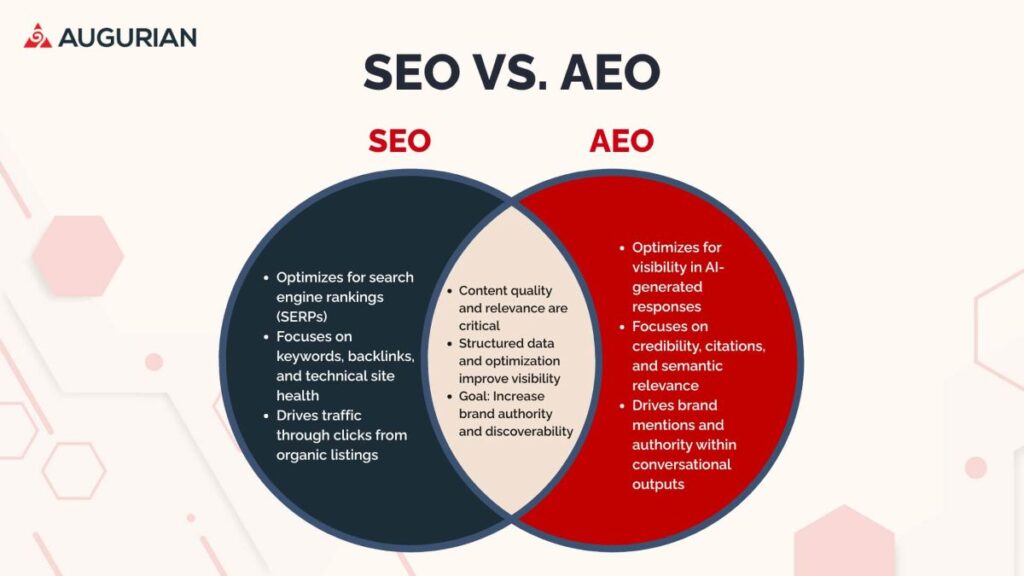
Combining AEO with traditional SEO creates a comprehensive digital presence by addressing both broad search visibility and precise answer delivery. Traditional SEO builds domain authority through backlinks, keyword optimization, and technical infrastructure, while AEO ensures your content becomes the definitive answer source across AI-powered platforms.
Coverage Across Multiple Search Channels
This combination provides coverage across multiple search touchpoints:
- Traditional SEO positions your website in standard search engine results pages (SERPs), capturing users who browse through multiple listings.
- AEO targets position zero opportunities—featured snippets, knowledge panels, and AI-generated answer boxes—where users find immediate solutions without clicking through multiple results.
Serving Different User Intent Stages
The synergy between these approaches serves users at different stages of their search journey:
- Traditional SEO excels at capturing users in research mode, exploring topics broadly and comparing options. These users typically review multiple pages, spend time reading detailed content, and evaluate various sources before making decisions.
- AEO addresses users seeking immediate, specific answers. Someone asking “what temperature should I bake salmon” wants a direct response, not a 2,000-word article about salmon preparation.
By optimizing for both approaches, your content satisfies quick-answer seekers and provides depth for those wanting comprehensive information.
Building Authority Through Multiple Ranking Signals
Traditional SEO establishes credibility through domain metrics, backlink profiles, and content depth. Search engines evaluate hundreds of ranking factors including site speed, mobile responsiveness, and historical performance. This foundation creates trust signals that benefit all content on your domain.
AEO leverages this established authority while adding structured data markup, entity relationships, and semantic relevance. When Google recognizes your site as authoritative through traditional SEO metrics, your AEO-optimized content receives preferential treatment for featured positions. The combination amplifies both
How GEO Targeting and Search Experience Optimization (SXO) Work Together
GEO targeting amplifies the AEO-SEO synergy by delivering location-specific content that matches both user intent and geographic context. When agencies implement geographic optimization, they create content that answers queries with regional relevance, appearing in local search results, map packs, and location-based AI responses. This precision ensures businesses connect with audiences in specific markets while maintaining the answer-focused approach central to AEO strategies.
Key GEO Targeting Elements That Strengthen Content Performance:
- Location-specific schema markup that signals geographic relevance to search engines
- Localized FAQ sections addressing region-specific questions and concerns
- City and neighborhood-level content optimization for hyper-local visibility
- Multi-location structured data implementation for businesses with physical presence
- Regional keyword integration within natural, conversational content formats
Search Experience Optimization (SXO) bridges the gap between ranking well and keeping users engaged once they arrive. While traditional SEO focuses on getting visitors to your site and AEO ensures you provide direct answers, SXO guarantees those visitors stay, interact, and convert. Page speed, mobile responsiveness, intuitive navigation, and interactive elements all contribute to reduced bounce rates and increased dwell time—signals that search algorithms interpret as content quality indicators.
The relationship between SXO and answer-focused content creates a feedback loop. Fast-loading pages with clear answer hierarchies encourage users to consume more content, which generates behavioral signals that boost rankings. When agencies optimize for both answer delivery and user experience, they create environments where visitors find immediate value without friction.
SXO Components That Amplify AEO-SEO Results:
- Core Web Vitals optimization ensuring instant answer accessibility
- Mobile-first design matching the primary device for voice and quick searches
- Clear information architecture guiding users through related questions
- Interactive elements like expandable FAQs and jump-to-answer navigation
- Visual content integration supporting text-based answers with images and videos
Geographic targeting becomes particularly powerful when combined with SXO principles. A user searching for “best emergency plumber near me” expects not just a relevant answer but also a seamless experience
What Advanced Techniques Do Leading AEO SEO Agencies Use to Optimize For AI-Powered Search Environments?
Leading AEO SEO agencies use structured data markup to help AI systems understand content context and relationships. Schema.org vocabulary enables search engines to parse information about entities, events, products, and FAQs, directly feeding AI algorithms that generate featured snippets and knowledge panels.
Structured Data Implementation
Advanced agencies deploy multiple schema types simultaneously to maximize visibility across different AI-powered features. JSON-LD formatting allows search engines to extract precise answers without relying solely on visible content parsing.
- FAQ schema for question-answer pairs
- HowTo schema for step-by-step instructions
- Article schema with speakable sections for voice search
- Organization and LocalBusiness schema for entity recognition
- Review and AggregateRating schema for trust signals
Entity and Topic Authority Building
AI systems like Google’s BERT and RankBrain prioritize content from recognized authorities on specific topics. Top agencies create comprehensive topic clusters where pillar content connects to detailed subtopic pages through strategic internal linking. This architecture signals topical expertise to machine learning algorithms.
The synergy between aeo seo agency services and high-ranking content becomes evident when agencies map semantic relationships between concepts. Natural language processing models identify entities mentioned throughout content, rewarding sites that demonstrate depth across related subjects rather than isolated keyword targeting.
Conversational Content Optimization
AI-powered search environments interpret queries as natural language conversations. Agencies optimize content to match how people actually speak and ask questions, particularly for voice-activated assistants.
Content structured around long-tail conversational phrases performs better in AI-generated responses. Agencies analyze search query patterns to identify question formats like “how do I,” “what’s the best way to,” and “why does” variations that trigger AI answer boxes.
Multi-Platform AI Optimization
Leading agencies extend optimization beyond Google to platforms like ChatGPT, Bing’s AI chat, and other generative AI tools. This requires creating content that AI models can confidently cite as authoritative sources.
Agencies focus on:
- Clear attribution and citation-worthy formatting
- Factual accuracy with supporting data
- Comprehensive coverage that answers follow-up questions
- Scannable structures that AI can easily process
How AEO And Traditional SEO Work Together To Improve Traffic Quality And Business Outcomes
The combination of AEO SEO agency services and high-ranking content directly improves traffic quality by attracting users with specific intent rather than casual browsers. Traditional SEO brings in a large number of visitors through keyword rankings, while AEO filters this traffic by providing precise answers that match user queries, resulting in visitors who are further along the decision-making journey.
Higher Conversion Rates Through Intent Matching
Visitors arriving through AEO-optimized content demonstrate stronger purchase intent because they’ve found exact answers to their questions. When someone discovers your content in a featured snippet answering “best CRM for small businesses under $50/month,” they’re closer to buying than someone searching generic terms like “CRM software.”
This alignment of intent leads to measurable improvements in business outcomes:
- Reduced bounce rates as users find relevant information immediately
- Longer session durations when content comprehensively addresses their needs
- Increased page depth as satisfied users explore additional resources
- Higher conversion percentages from qualified traffic sources
Revenue Growth Through Multi-Channel Visibility
The combined approach positions your content across traditional search results, featured snippets, AI overviews, and voice search responses. This multi-channel presence captures audiences at different stages of the buyer journey, from awareness through decision-making.
Businesses implementing both strategies report 30-50% increases in qualified leads compared to traditional SEO alone. The reason? AEO-optimized content appears in zero-click searches where users get answers without visiting websites, establishing brand authority even when direct clicks don’t occur.
Competitive Advantage in AI-Driven Search Landscapes
Companies using AEO SEO agency services gain positioning advantages as search engines evolve toward conversational AI. While competitors focus solely on traditional rankings, businesses with structured, answer-focused content dominate AI-generated responses from ChatGPT, Google’s AI Overviews, and voice assistants.
This proactive strategy protects against algorithm shifts. Content structured around user questions maintains relevance regardless of how search interfaces change, creating sustainable organic visibility that doesn’t require constant reactive adjustments.

Indispensable factors to consider before choosing an SEO Agency

Knowledgeable SEO gurus for Architect

Graphic designers and search engine optimization services
About The Author
